
Barn Owl Recovery project – creating new nesting sites
23 March 2025
Barn owl numbers in the UK are estimated at around 6,000 breeding pairs – roughly half of what they were in the mid-1990s. Today, up to 90% rely on artificial nest boxes due to the loss of natural nesting sites. More boxes are essential if barn owl numbers are ever to recover to their former levels.
The Wadhurst Nature Recovery Network, set up in 2020, brings together 25 local landowners covering around 500 acres, to deliver practical nature recovery projects across Wadhurst and the Bewl Valley. Working in partnership with the Sussex Barn Owl Study Group, the Network approached the High Weald team in 2020 for funding from Sussex Lund (now known as the Nature and Community Fund) for a new project to increase nesting opportunities for barn owls and support their recovery in the area.
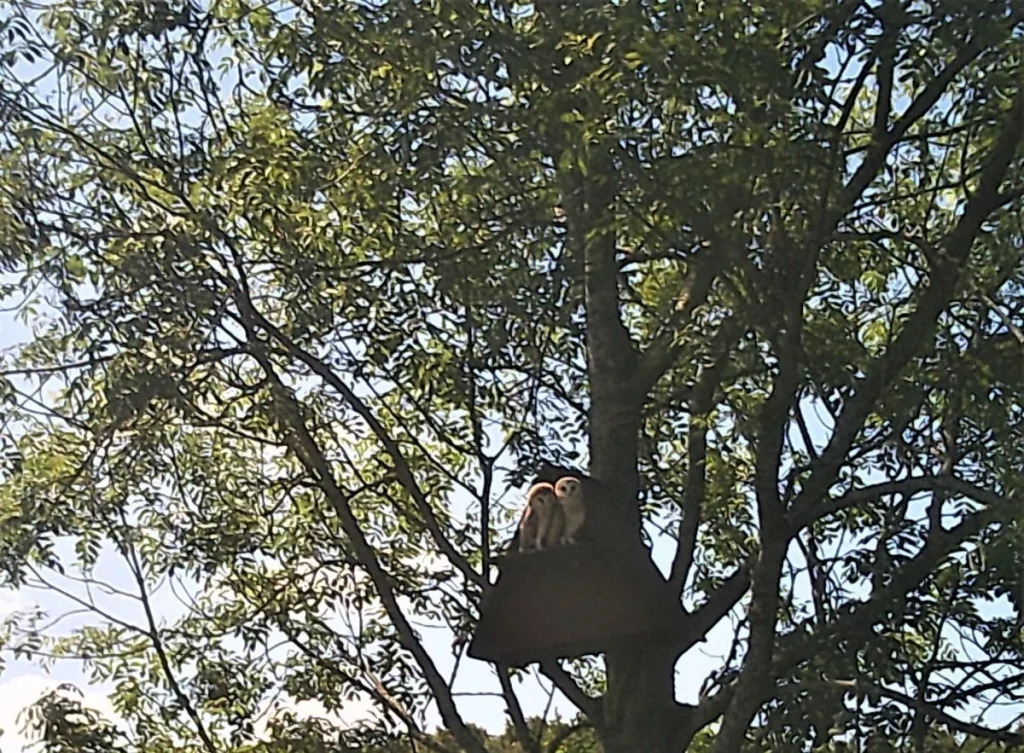
During 2023 the group installed 25 nest boxes across a five-mile corridor between Best Beech, Ticehurst and Stonegate. Sites were carefully selected following ecological surveys, and landowners received training to improve habitat management for barn owls and their prey.
The results have been encouraging. In the first full breeding season (2023), three nest boxes were already occupied by barn owls, producing multiple chicks. While long-term expectations suggest around 30% occupancy, this early success highlights the effectiveness of a coordinated, landscape-scale approach.
The project has also delivered wider benefits. It has strengthened relationships between neighbouring landowners, increased local awareness and enthusiasm for nature recovery, and sparked interest in further initiatives, including support for little owls.
Ongoing monitoring will track breeding success, with landowners taking on long-term stewardship of the boxes. This project provides a strong foundation for future Nature Recovery Network activity in the High Weald and shows how collaboration can deliver meaningful gains for wildlife.
View all news