
Reviving the High Weald’s Local Wildlife Sites
19 May 2026
About Local Wildlife Sites
Local Wildlife Sites (LWS) are some of our most important places for nature.
They are locally designated sites, recognised for their special nature conservation value. Together, they cover around 5% of the UK’s land area and they play a vital role in supporting wildlife, maintaining ecological networks and helping nature recover at a landscape scale.
Local Wildlife Sites are sometimes described as the “building blocks” of nature recovery. However, unlike Sites of Special Scientific Interest (SSSIs), LSWs do not have statutory protection in law, and there is no national funding or advisory mechanism to help landowners care for them. Their protection instead comes primarily through local planning policies and the National Planning Policy Framework, which recognises their importance as part of the country’s ecological network.
LWS in the High Weald
There are 208 LWS protecting some of the High Weald’s most valuable habitats, including ancient woodland, species-rich meadows, heathland, wetlands and traditional orchards. They provide refuge for wildlife and help connect habitats across the wider landscape, forming an important part of the High Weald’s rich ecological mosaic.
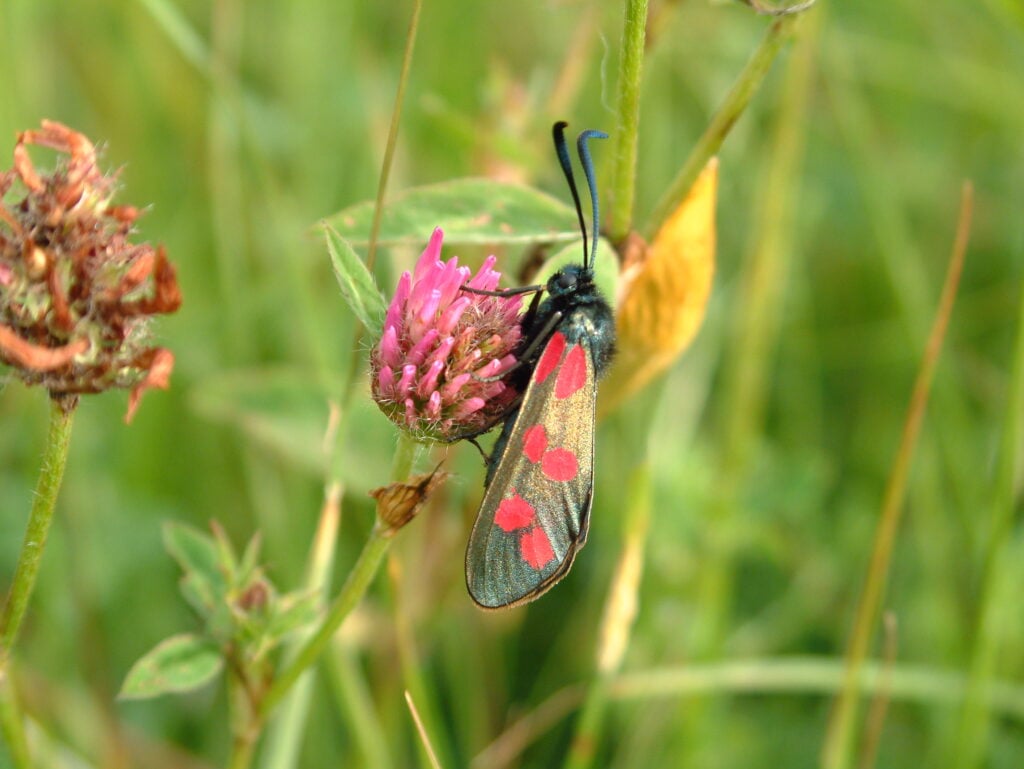
LWS facts and figures
- There are 208 Local Wildlife Sites across the High Weald, covering more than 10,800 hectares.
- Sussex contains 136 of these sites, while Kent contains 71.
- Wealden District has the highest number of sites, while Rother contains the largest total area.
- More than 75% of LWS are under 10ha in size.
- In Sussex, only 13 sites have been surveyed in the last six years.
- The habitats they protect are hugely varied. In the Sussex High Weald alone, Local Wildlife Sites include lowland meadows, ancient woodland, heathland, wetlands and traditional orchards.
- LWS support species associated with some of the High Weald’s most characteristic habitats, including orchids, waxcap fungi, dormice and nightingales.
- In Kent, the LWS system is managed by Kent Wildlife Trust, on behalf of Kent Nature Partnership.
- In Sussex, they are managed via the Sussex LWS Initiative.
Neglected beauties
Many LWS in the High Weald are relatively small and privately owned. More than 75% are under 10 hectares, and responsibility for their care is spread across hundreds of landowners who receive little support, despite the importance of these sites.
We don’t know as much as we would like about the condition of some of these sites. We know that managing them can be challenging. If grasslands are under-grazed they can become clogged with brambles and young trees, while over-management and use of artificial fertilisers can reduce the number and types of wildflowers and insects. Some LWS woodlands in the High Weald are at risk from high fallow deer numbers that over-graze and damage woods, and from other non-native invasive species such as cherry laurel and rhododendron that smother and shade out native woodland flowers.
Recovery and long-term management
To help address this, the High Weald National Landscape team is working in partnership with Sussex Wildlife Trust and Kent Wildlife Trust to support the recovery and long-term management of Local Wildlife Sites across the High Weald.
A key part of the work will be building long-term relationships with landowners and managers, working with LWS owners to assess habitat conditions and to provide practical advice and help with accessing funding and support.
Local Wildlife Sites cannot be seen in isolation: they are part of a wider network of hedgerows, rivers, woodlands and grasslands that together allow wildlife to move and thrive across the landscape.
Ultimately, the three-year project is about securing the future of some of the High Weald’s most precious places: supporting the people who care for them to improve habitat condition, and strengthen the resilience of the landscape for generations to come.
If you are the landowner of a local wildlife site and would like to find out more, please contact project officer Janet Whitman to discuss your site, and arrange a free survey.
We are delighted to be working with the Kent Wildlife Trust and Sussex Wildlife Trust on this project which is supported by the locally-led High Weald Farming in Protected Landscapes grant programme, sponsored by Defra.