
Pasture and Profit: farmer-led support for regenerative farming
18 May 2026
Through the Pasture and Profit project, farmers are working together to build resilient, profitable businesses through pasture-based, regenerative farming.
Regenerative farming in the High Weald
The project is led by Pastures for Life. It was pioneered here in the High Weald, where a large proportion of the farmed landscape is permanent pasture. It grew out of the High Weald team’s work with local farm clusters, and developed organically through collaboration between farming network Pasture for Life, the High Weald team and local farmers, as a practical response to the challenges facing livestock farmers in this distinctive landscape.
The project’s success in the High Weald quickly demonstrated the value of farmer-to-farmer learning and it has since expanded to 18 other Protected Landscapes across England. It has delivered lasting benefits to more than 500 farming businesses in Protected Landscapes across England, helping farmers reduce inputs, improve soil health and strengthen the ecological value of their land.
Farmers using 100% pasture-fed regenerative farming systems report stronger profitability as well as healthier livestock, richer biodiversity and more productive pastures. Crucially, these systems are also better able to withstand extreme weather and rising input costs, leading to greater resilience.
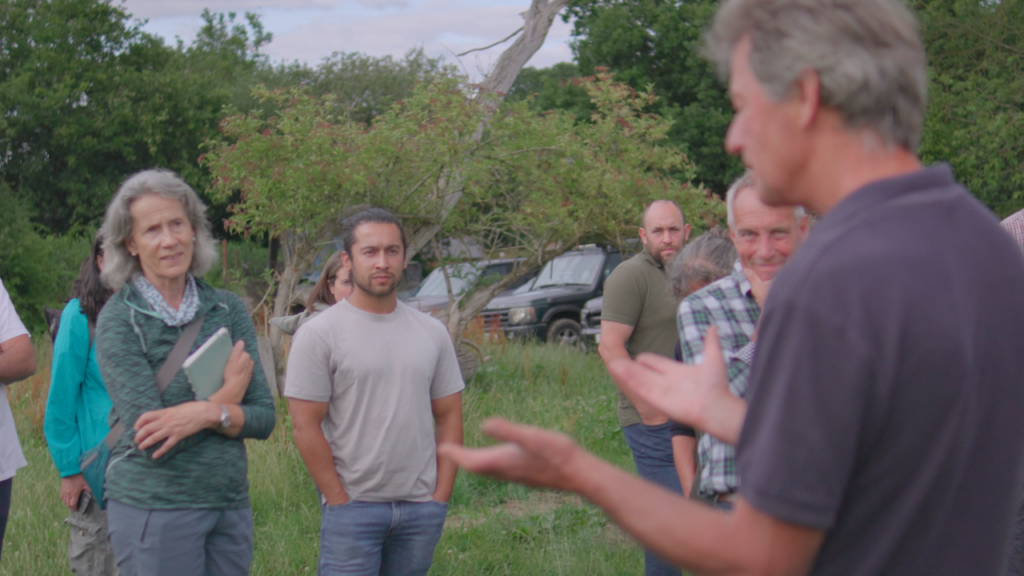
“Since we began Pasture and Profit, UK agriculture has endured significant challenges and continues to do so. Rising input costs, market uncertainty and increasingly unpredictable weather are placing growing pressure on farming businesses.
There has never been a more important time to enable like-minded farmers to come together to support each other, learn from one another and focus on building resilient businesses for the future.” Christine Meadows, High Weald Land Management Officer
A farm mentoring network
The Pasture and Profit project is based on the conviction that farmers learn best from other farmers. Through a mix of on-farm events, mentoring and peer networks, it has built a supportive community where farmers can share experiences, discuss challenges and explore practical ways to transition towards regenerative farming systems.
The project is supporting a growing community of progressive farmers committed to managing the landscape sustainably. There are now 10 High Weald mentors running fully pasture-based systems without grain or feed concentrate, keen to share their knowledge and enthusiasm. The mentors have worked with almost 100 farmers, between them managing more than 5,400 hectares of land across the National Landscape.
During 2025/26, 28 learning sessions were held, including farm walks, webinars, mentoring programmes, discussion groups, technical workshops and collaborative learning events. Most of them took place on working farms, allowing participants to see regenerative practices in action and discuss real-world solutions with other farmers.
Subject topics are put forward by farmers taking part in the programme, with discussions ranging from soil health and grazing management to agroforestry, biodiversity monitoring, butchery and direct marketing.
Learning on the ground
Seeing working examples on the ground has proved especially powerful. At a hands-on soil workshop at Burwash, farmers examined soil samples from their own land under microscopes, discussing the complex web of life beneath their feet. At a visit to Lidham Farm near Hastings, farmers explored how trees and livestock can work together to create resilient grazing systems, with host farmer Paul Cooper demonstrating how scattered trees and woodland shaws act as natural shelter for cattle.
Peer learning is particularly valuable when tackling practical challenges. At Lomas Farm, Mayfield, a session on outwintering cattle demonstrated how careful grazing management and longer rest periods can improve pasture productivity, even on the High Weald’s heavy clay soils. A butchery event at Goodtrees Farm, West Hoathly, demonstrated how pasture-fed livestock systems and on- or near-farm butchery operations can combine to improve profitability, enhance animal welfare and provide greater control over product and value. Meanwhile, at Cockhaise Farm, Lewes, farmers discussed hedgerow planting, composting and agroforestry as ways to strengthen both farm resilience and wildlife habitat.
Feedback and impacts
The impacts have been significant. As a result of the programme, farmers taking part are planning changes and improvements such as enhancing wildlife habitats (for example, planting trees or hedges), making changes to grazing, and improving infrastructure. Other improvements including reducing feed concentrate and changing marketing strategy.
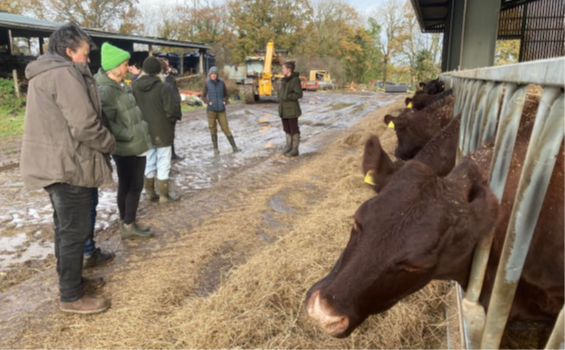
Feedback from the 2025/26 events showed that all of those taking part had increased their knowledge and confidence in nature-friendly farming practices such as overwintering cattle on the Weald’s heavy clay soils, integrating cattle into wooded areas and multi-paddock grazing.
All of those surveyed also said that Pasture and Profit was helping them make positive changes on their farm.
A regenerative farming community
As well as sharing practical help and information, the events also create space for reflection and connection. As one participant put it, the most important aspect was “the critical value of different landowners getting together to share experiences, learnings, successes and failures.”
This sense of community was strongly reflected in feedback from farmers, with over 75% saying they felt part of a like-minded group and that the event made them feel part of a community, and 68% making new connections with other farmers.
Georgie Anstey, the programme’s qualitative evaluator, observed: “The mentoring programme resulted in a statistically significant shift in wellbeing amongst the farmers who were involved. This is an excellent validation of such a short-term programme.”
Pasture and Profit sits at the heart of the High Weald team’s work to promote nature-friendly farming across the National Landscape and demonstrates how strong partnerships between organisations can deliver greater benefits for more farmers. The programme is helping to grow a community of confident, forward-thinking farmers who are reducing inputs, enhancing biodiversity and strengthening connections with their local communities.
As one farmer summed up: “This programme has been instrumental in supporting our family farm in its complex transition. I’m so grateful.”
If you are a farmer in the High Weald interested in finding out more about regenerative farming we would love to hear from you. Please email us at info@highweald.org and we will connect you to the local regenerative farming network.
We are delighted to be working with Pastures for Life on this project which has been supported by the locally-led High Weald Farming in Protected Landscapes grant programme, sponsored by Defra.
View all news