
Removal of rhododendron at Battle Woods
17 March 2021
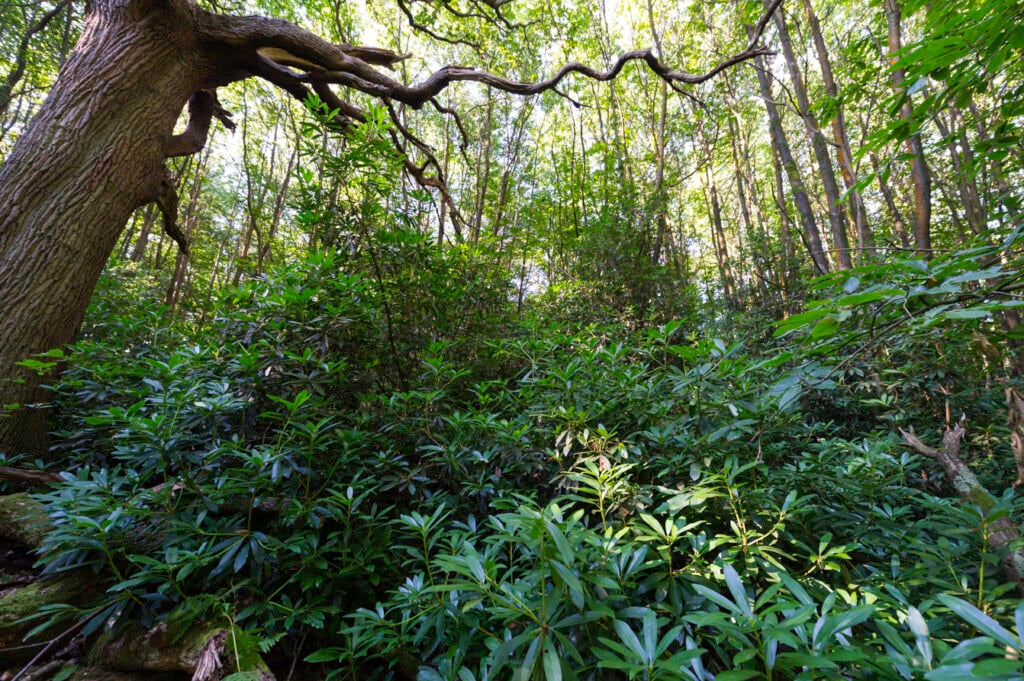
Battle Wood is a privately owned area of ancient woodland in the High Weald, rich in native species but increasingly under pressure from invasive plants. Over time, large stands of rhododendron and extensive bracken had taken hold across the site, suppressing native ground flora and limiting the woodland’s ecological diversity.
Riddled with rhodedendron
In some areas the rhododendron was over 20 feet tall, creating areas that were completely impenetrable. These invasive species were spreading into neighbouring woodlands, compounding the wider landscape impact.
Funding from Sussex Lund (Nature and Community Fund) enabled a programme of targeted practical works to address these challenges. Specialist contractors were brought in to clear dense rhododendron across the site, followed by herbicide treatments to prevent regrowth. Bracken was also treated to reduce its dominance and allow light to reach the woodland floor.
The project is creating space for native plants to recover and spread, including characteristic woodland species such as bluebells and wood anemones. The reduction in dense cover is also expected to lessen deer pressure, as these areas had provided shelter for browsing deer.
“I thought the grant process, for someone who has an absolute phobia of paperwork, was relatively painless, with good communication and support available throughout from all at the High Weald.
I can’t thank you all enough for utterly transforming the landscape….I think the deer might be a little annoyed that we have removed a load of their bedrooms! Hopefully this will give them less cover to lurk in and will be a start in getting the numbers down so we can start to think about coppicing and regeneration. The neighbours are over the moon and it has already prompted them to think about reducing the Rhododendron in their garden, especially those that are near to the boundary so as to minimise seed transfer.” Gavin Stacey, Landowner
Access for works
A key element of the project was the construction of a new access track and turning area. This has transformed how the woodland can be managed, allowing machinery and contractors to access the site throughout the year, reducing damage to the woodland’s clay forms during wet winter months.
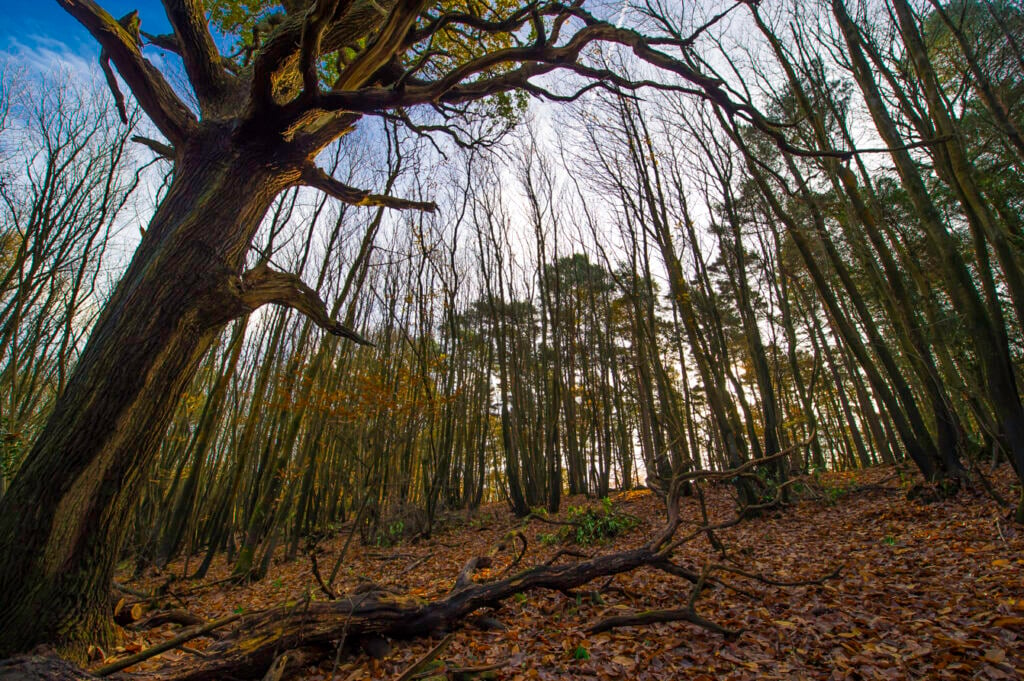
Improved access makes it possible to carry out regular coppicing and extract timber more efficiently, supporting the long-term health of the woodland. It also enables the use of mobile sawmills, helping to make better use of timber products and supporting small-scale woodland economies.
A planned approach to nature recovery
The project marks a shift from reactive management to a more sustainable, planned approach. With the most intensive clearance work complete, ongoing management will focus on maintaining control of invasive species, supporting natural regeneration, and implementing a structured coppicing programme.
The benefits extend beyond the woodland itself. Visitors using the nearby public footpath will experience improved views and a more diverse landscape, while neighbouring habitats will no longer be affected by the spread of invasive species.
By combining practical intervention with long-term stewardship, the project demonstrates how even relatively small woodland sites can play an important role in restoring the ecological health and resilience of the wider High Weald landscape..
View all news