Managing deer on your land
If you have a problem with deer on your land, we can help
Deer are transient animals and do not respect boundaries. Deer management is best undertaken on a landscape scale, with as many landowners and farmers taking part as possible.
Watch out for signs of deer damage on your land. In woodlands, these can include:
- Browsed shoots and young trees – leaves and new growth have been eaten
- Little or no woodland understorey – few saplings, shrubs or wildflowers
- Bark stripped from trees – especially in winter, leaving scars or killing young trees
- Antler rubbing on young trees – bark scraped away by bucks in spring and summer
On farmland, signs of deer damage include grazed crops such as winter cereals, oilseed rape and maize, damage to hedgerows and trample damage.
Whether you are spotting these signs for the first time and want to start looking into deer management, or whether you have an existing arrangement you would like to formalise, we are here to help.
Free advice and support
We are working with landowners across the High Weald to provide free advice and tailored support to help manage deer populations.
Contact our team for a no-obligation conversation about managing deer on your land – from initial advice, to finding a qualified stalker, or support for training and equipment.
Email Mark Smith, High Weald Deer Coordinator, or call us on 01424 723011.
Getting started with deer management
Managing deer on your land doesn’t need to be complicated. Here’s how to get started.
1. Assess the impact on your land
First, look for browsing damage on crops or check nearby woodland. If you have few or no young trees under 1 metre, or bramble under 0.5 metres, that’s a clear indicator of high deer pressure. We can advise on undertaking a formal deer impact survey.
2. Find a registered deer stalker or manager
We can connect you with deer stalkers and managers who have registered with the High Weald National Landscape Partnership. Always verify their insurance, firearm certificate, and qualifications (DSC1 is the key qualification to ask for). Read through our guidance on appointing a stalker for further information.
3. Set clear expectations
Agree a plan with your deer manager or stalker. This should include frequency of visits, who will be present, communication methods (how you will keep in touch), cull targets, and carcass arrangements. Use our template stalking licence agreement below to put this in writing.
4. Monitor and review
Ask your deer manager or stalker to keep cull records and conduct an annual deer impact assessment. Review progress at the end of each season and adapt targets accordingly.
5. Consider joining a local group
Deer don’t respect boundaries, so working collaboratively with neighbouring landowners is more effective than going it alone. Speak to your neighbours and ask them to get in touch with us, or we can help you connect with or form a local deer management group.
Frequently asked questions by landowners
If you are considering taking steps to manage deer on your land, do get in touch – we would be happy to offer advice and guidance. We can connect you with a trained deer stalker, and also signpost how to get funding for deer management equipment.
Below are some of the questions we get asked most often about managing deer.
Deer are elusive — the numbers you see are only a fraction of those present. On farmland, check for visible browsing damage on crops. In woodland, look for the browse line: if you have no trees under 1 metre, or bramble is kept below 0.5 metres, that indicates significant deer pressure. The most reliable way of checking is to undertake a regular deer impact survey using standard observation techniques. There is guidance from Forestry Commission on this, or contact us and we are happy to advise on how to conduct a survey.
There is no legal requirement for deer stalkers to hold formal qualifications, but most police firearms departments require a Deer Stalking Certificate Level 1 (DSC1) before ‘deer as quarry’ is added to a firearms certificate. The DSC1 covers firearms safety, deer knowledge, food hygiene, and the law. Always ask your stalker for copies of insurance, their firearm certificate, and the DSC1. References from other landowners are also advisable.
This depends on your priorities. If your primary goal is deer control, the stalker is providing a service — financial exchange can range from an occasional venison supply through to a commercial letting of stalking rights. If deer numbers are very high, prioritise finding a stalker who can achieve effective cull targets over maximising income. We’re happy to discuss your specific situation.
Yes, a written stalking licence agreement is strongly recommended. It sets out how, when, and where stalking takes place; communication arrangements; cull targets; and what happens to carcasses. Use our template (see resources below) as a starting point — it can be adapted to your needs.
A qualified, insured stalker is responsible for ensuring every shot is safe, including stopping when members of the public appear. Whilst the landowner needs to communicate the presence of invited guests on the land to the deer stalker, the landowner is not responsible for keeping uninvited members of the public away from the area being stalked. If it helps, signage indicating the presence of deer management for ecological purposes can be installed. We can provide examples of good practice.
A competent stalker will treat the shot deer as a food product and follow correct hygiene procedures. If your agreement includes provision of carcasses to you, food hygiene rules apply to any onward sale.
Deer can be sold as an in-fur carcass to a non-retail game dealer or Approved Game Handling Establishment (AGHE), or in small quantities directly to local restaurants, pubs, or hotels. The deer must be inspected at gralloching by someone holding a Large Game Trained Hunter qualification (included in DSC1), and the carcass must be accompanied by a numbered and signed declaration. See our resources below and our selling venison page for more detail.
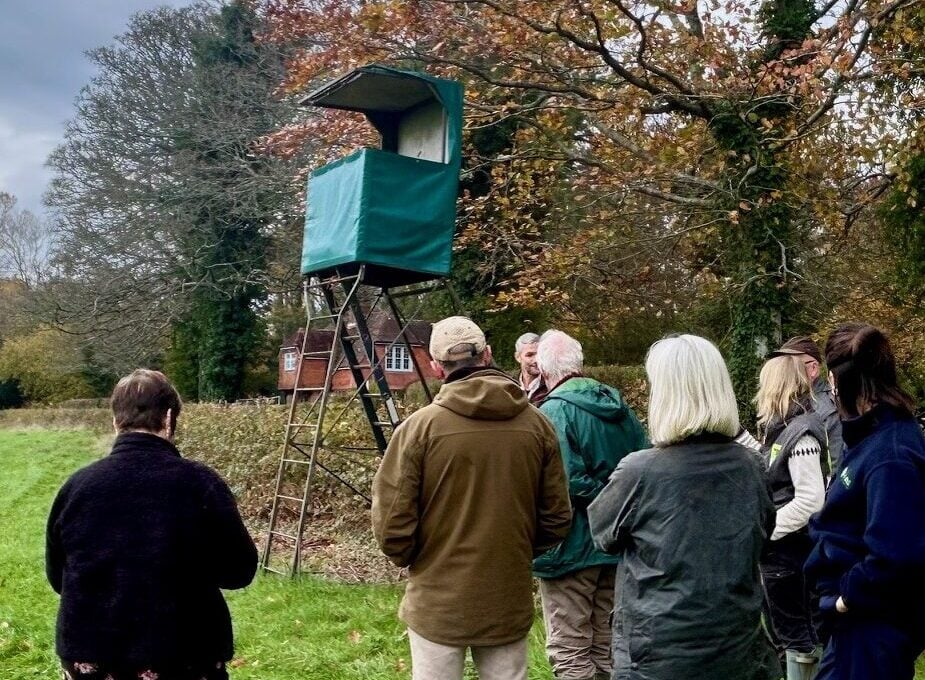
Yes — funding is available through the Farming in Protected Landscapes (FiPL) programme for deer management projects, including deer seats and other infrastructure. We can help advise you on your application and guide you through the paperwork. Please fill in our simple grant enquiry form and we will get back to you with advice and support.
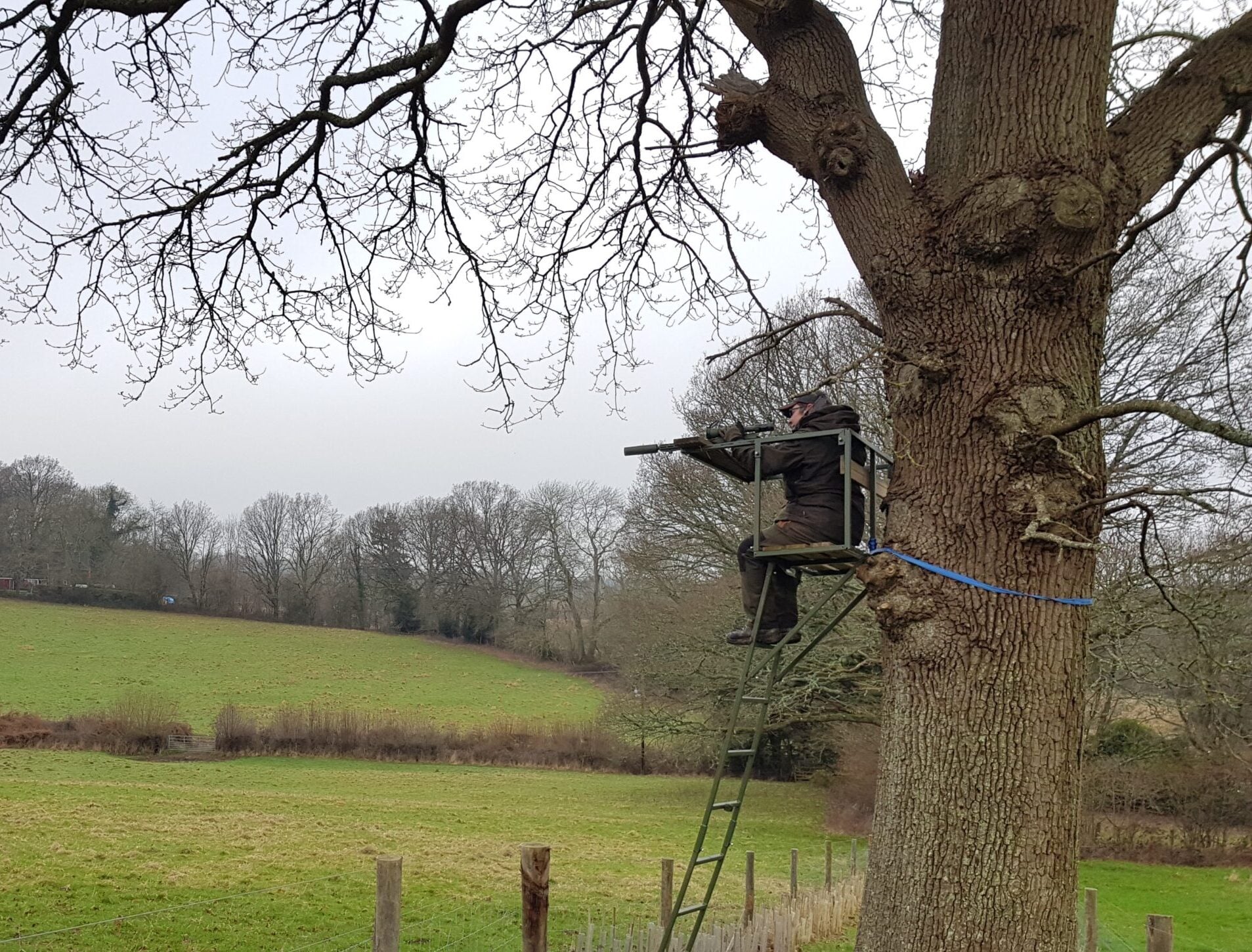
Yes. There is no legislation preventing deer management on small parcels of land, provided that shooting takes place at least 50 feet from the centre of a road. High seats are often good practice on flat or small areas, allowing the stalker to shoot safely downwards. Agreeing with neighbouring landowners to coordinate deer management can be very productive, and grants are available for deer seats through the Countryside Stewardship Scheme.
Guidance and templates
We have a range of guidance and templates to help landowners and farmers manage deer – contact us for further information.